Reducing Churn at vidIQ
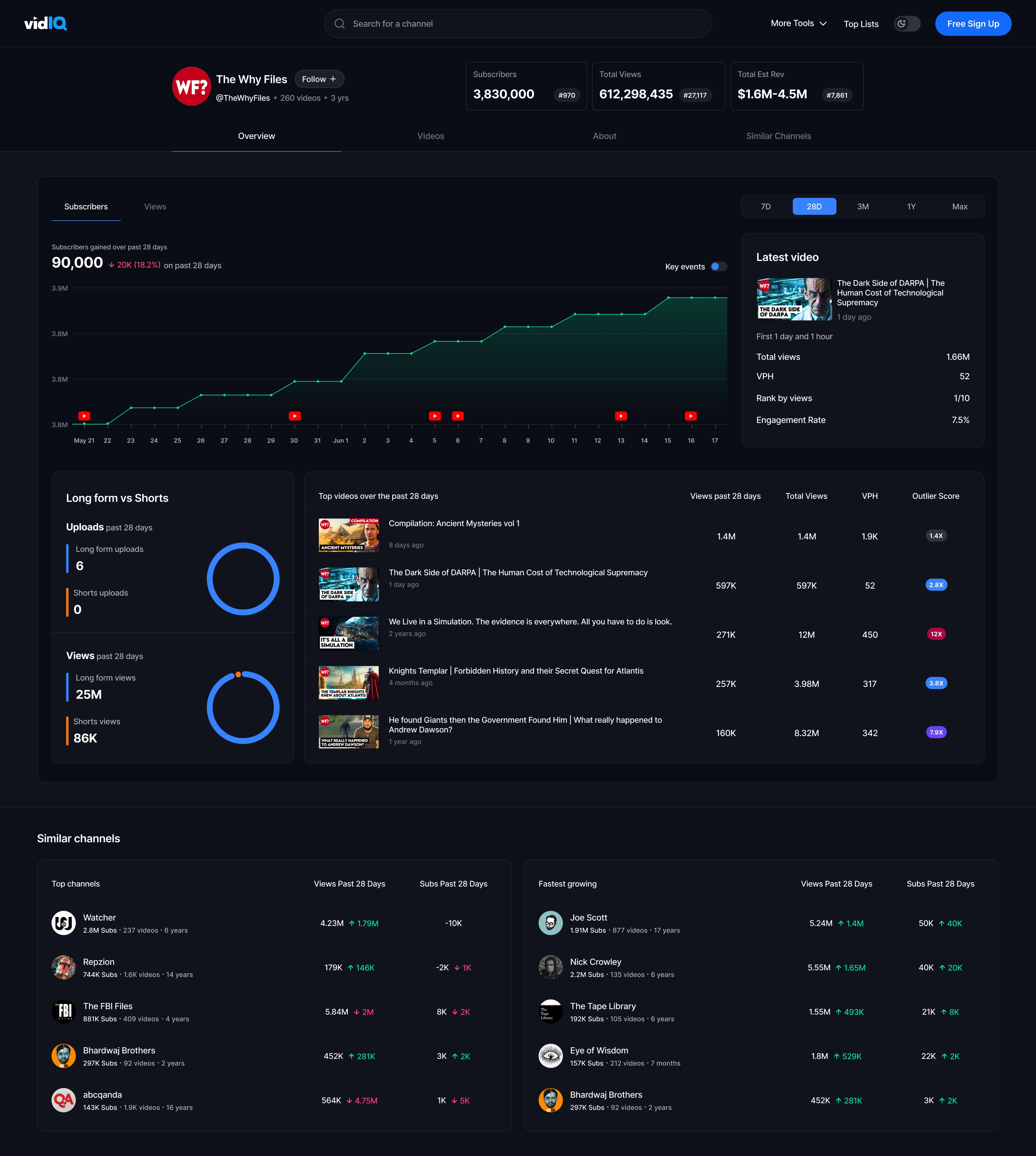
At vidIQ, the product team had a clear goal: reduce churn.
Churn had started to rise after a period of fast shipping. We had lots of data, but I wanted to understand the customer reality behind it — why people upgraded, what they expected, and why they eventually left.
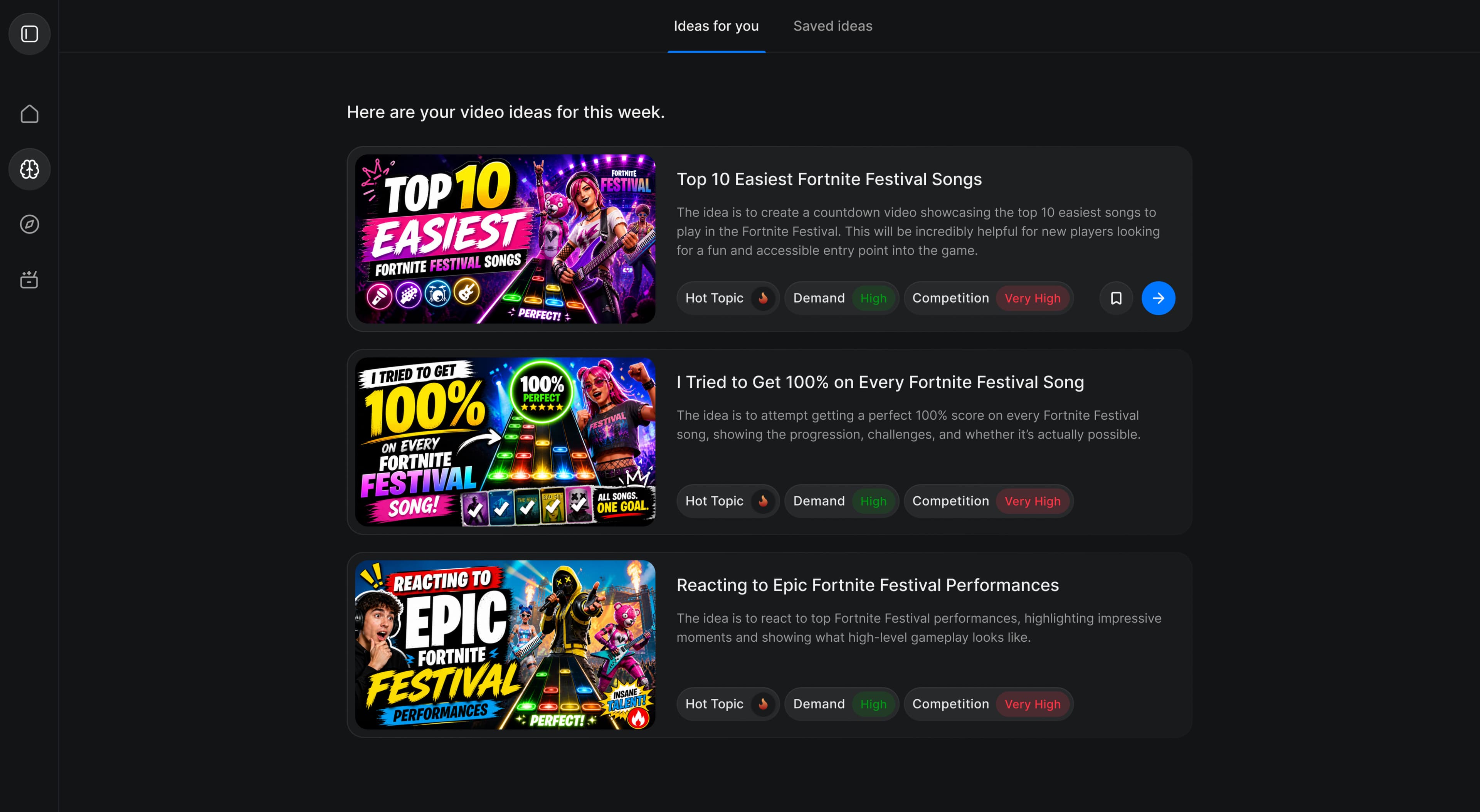
Ideas for you
Starting with research
In order to understand what was causing churn, I ran a round of ‘jobs-to-be-done’ switch interviews with two cohorts of users. People who had recently signed up for a paid plan, and people who had recently churned from a paid plan. The goal was to understand the expectation of customers, and where we were failing to deliver.
A clear pattern emerged, people would always talk about the daily ideas feature and how it was the key reason for them upgrading, but the realised the ideas we’re living up to the expectation so they would downgrade after a few months of seeing no improvement.
Leveraging AI to make a product bet
With AI I was able to quickly experiment with new ideas using a group of design partners I’d recruited from the initial research calls. I was able to use chatGPT to deliver much better ideas and get an early signal that this could be a good bet for us to invest more time into.
I presented the findings back to the product team and was able to get buy in to spend more time developing a new version of the daily ideas feature.
Working with design partners
Now I was able to fully focus on improving the feature I worked with the core group of design partners to really refine the features.
I knew the core value was in the ideas themselves and I’d had some really positive feedback from the initial ideas but they always asked the same questions. ‘What makes this a good idea?’ The key signal was that users wanted to see the data that backed the idea up. So I worked on a few iterations that helped build trust in these ideas.
Finalising the designs
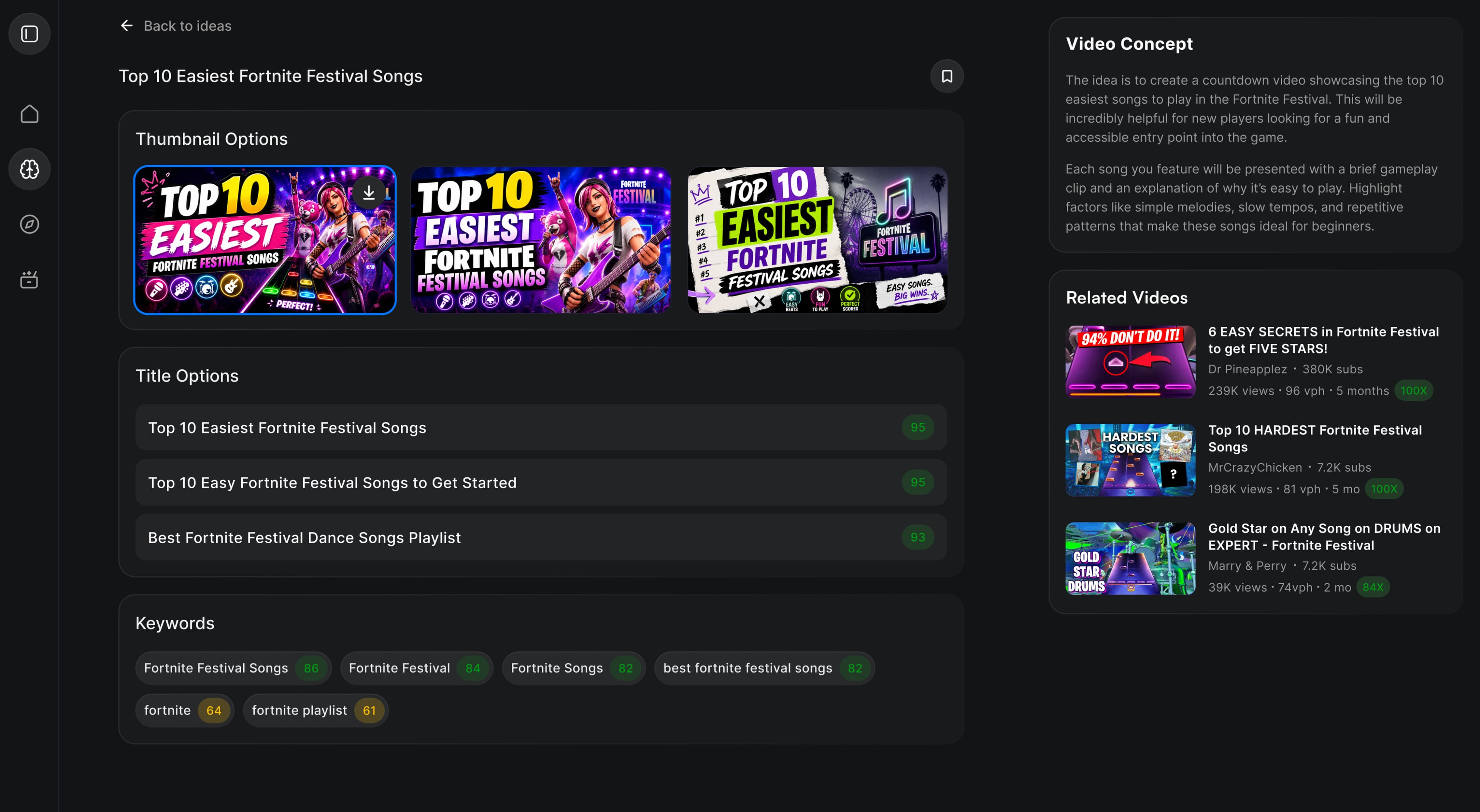
The final part was to get the design of the feature down. We’d recently started doing AI generated thumbnails, so I ran an experiment with including thumbnails in the video idea. This really resonated as the users could get a real feel for the idea and what the title & thumbnail pairing could look like.
I also discovered that users wanted to dig into the ideas and have more context on what the idea was about, as well as seeing multiple title & thumbnail options, keywords and what other videos were out there on the topic so they could research how others had approached the topic.
The result
When we released the new version of daily ideas we saw a 15% reduction in churn over the first 3 months. From there we expanded the feature to include more ways to find ideas and it became a core part of the product experience going forward.